Solitaire Oasis
- 4.5
- Rating
- 100.00K
- Installs
- Free
- Price
 Analysis by App-foxy
I went into Solitaire Oasis expecting a familiar card game with a relaxing presentation, but its real appeal is the way it turns short solitaire sessions into small skill tests. It is a free card game from FatMan Studio, built around a casual multiplayer challenge rather than a purely private game of patience. That distinction matters: I found myself paying closer attention to each decision because the experience feels less like filling time and more like trying to perform cleanly against another player or a shared challenge.
The store’s brief description calls it “Solitaire Oasis,” but that does not tell you much about how it feels in practice. The important question is whether you want a traditional, slow solitaire routine or a more competitive format that asks you to think quickly. My answer is that this is best suited to players who already enjoy solitaire and want extra tension, while newcomers may need a little time to understand the rhythm of skill-based play.
How the early goals shape each session
The first useful goal is not simply to finish a layout. It is to make fewer careless decisions while keeping the game moving. In ordinary solitaire, I can pause, reconsider a move, or restart without feeling watched. Here, the multiplayer challenge changes that mindset. Even when the rules remain approachable, every choice feels more deliberate because speed and accuracy become part of the result.
You May Also Like

 Blood Strike: 2.5 Anniversary
Blood Strike’s Loadouts Turn Every Drop Into a Tactical Gamble
A close look at Blood Strike’s custom loadouts: how fast access to signature weapons reshapes its battle royale rhythm, rewards preparation, and narrows the gap between fights.

 Pandora - Music & Podcasts
Pandora’s Music Is Easy to Start, but Harder to Recover
Pandora’s strength is its low-effort path from a seed to a station. Its weak spot is how much confidence it asks you to place in connection, setup, and quiet recovery.

 8 Ball Pool
 Is Built on Rivalries, Rematches, and Routine
A close look at the rivalries, rematches, shared routines, and unanswered safety questions that turn a quick pool match into a persistent mobile community.

 Samsung Music
’s Quiet Strength Is Playing What You Already Own
Its reach comes less from spectacle than from dependable access to a personal library. That simplicity is both the app’s strongest retention engine and its ceiling.

 AccuWeather: Weather Radar
AccuWeather Review: A Quick, Clear Forecast for Everyday Decisions
For everyday plans, the best forecast is the one you can understand quickly. AccuWeather makes rain timing, radar, and local conditions easy to act on, with a few trade-offs.

 Hill Climb Racing
Why Hill Climb Racing Still Turns Crashes Into One More Run
A tiny car, a bumpy hill and one more upgrade: Hill Climb Racing keeps resurfacing because its simple chaos makes every near-miss feel personal.
More From Our News Desk
View All News


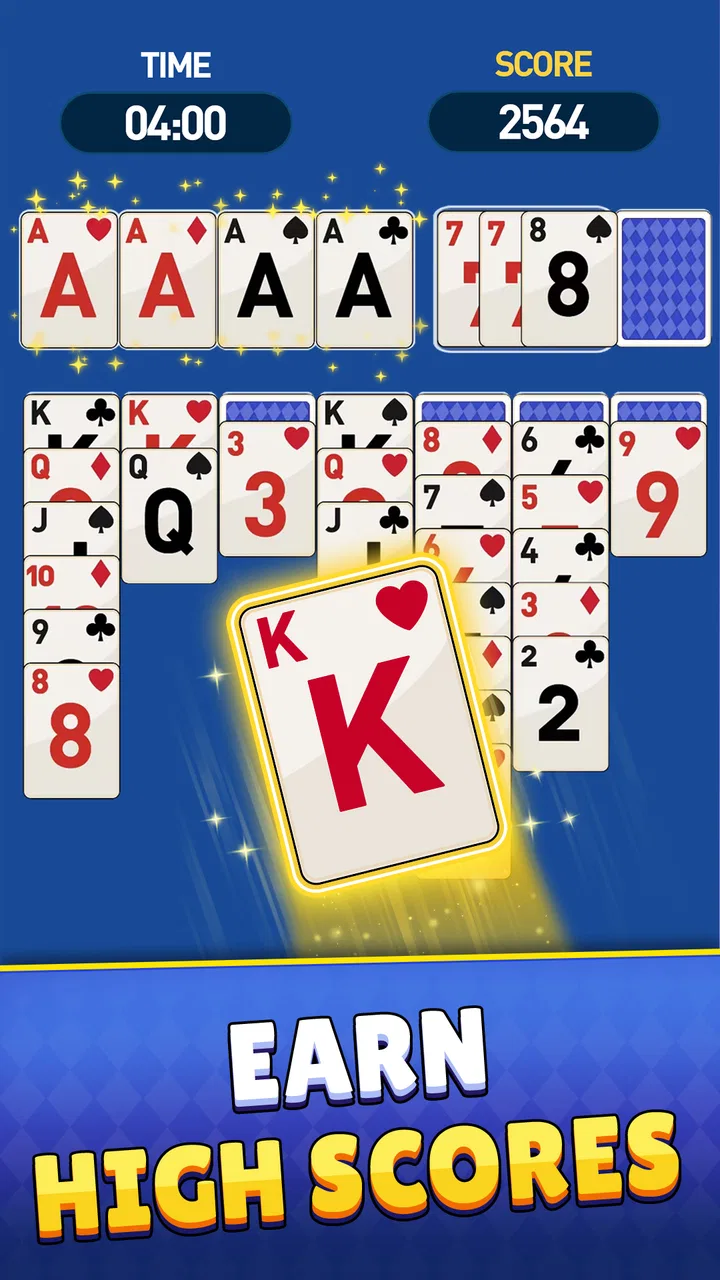
That makes the opening sessions easy to understand. I am looking for legal moves, exposing useful cards, and trying not to spend a promising opportunity too early. The game does not need a complicated tutorial concept to create direction; the card layout itself gives me an immediate problem to solve. For a casual player, that is a strong starting point because the objective is recognizable from the first hand.
What I appreciated most is that the early goal is practical rather than decorative. I am not wandering through a long story or managing a large collection before I can enjoy the core game. I can open it, play a short round, and quickly see whether my decisions were good enough. That makes it a natural choice for a commute, a waiting room, or a quick break when I want more involvement than passive scrolling.
There is also a useful difference between playing to complete a round and playing to improve a result. The first approach is comfortable for beginners. The second creates the longer-term hook. Once I understand the basic flow, I start noticing wasted moves, awkward sequencing, and moments where I reacted too quickly. That shift is where the skill-based design earns its place.
What progress feels like when the game stays simple
Because this is a focused card game, progress is felt mainly through better judgment. I do not need a large number of visible systems to notice improvement. A hand that once felt confusing becomes readable, and a rushed move becomes something I can recognize before making it. That kind of progress is subtle, but it is more satisfying than an artificial reward that does not improve how I play.
My practical advice is to treat the first few sessions as observation rather than performance. Watch which moves open the most options, avoid committing to a tempting sequence too early, and pay attention to how quickly the multiplayer format expects you to act. This approach is especially helpful for players arriving from slower solitaire apps, where taking time is usually harmless.
The game works well when I set a small personal target for a session: make cleaner decisions, finish with fewer mistakes, or remain calm when the layout becomes less obvious. These goals are more useful than chasing a vague idea of “winning everything,” particularly because card layouts can create situations that demand adaptation rather than a single perfect routine.
For someone who wants a quiet solo puzzle with no competitive feeling at all, this early structure may be less comfortable. The challenge is part of the identity, not an optional decoration. I would choose a conventional offline solitaire app instead if my priority were unlimited thinking time and a completely pressure-free pace.
Progress signals, challenge, and the changing pace
The strongest progress signal is my own decision quality. I can tell when I am improving because I begin to read the board before moving cards instead of reacting one step at a time. That is important in a game like this: the visible layout may be simple, but the order of actions can determine whether useful cards become available or remain blocked.
I also found that multiplayer framing makes small improvements feel more meaningful. Completing a round is one thing; completing it while maintaining momentum is another. The game encourages me to think about efficiency without turning every session into a serious contest. That balance is why I see it as casual rather than hardcore, even though careless play can still be punished.
The difficulty curve feels most natural when I stop expecting every hand to unfold at the same speed. Some layouts invite immediate progress, while others require patience and a willingness to delay a move. The challenge comes from managing those differences. If I play every hand with the same automatic pattern, I create problems for myself. If I examine the available options first, I have a better chance of keeping the board flexible.
One non-obvious lesson is that speed should come after clarity, not before it. Players coming from fast mobile games may try to tap quickly as soon as a move appears. In this game, that habit can be counterproductive. I get better results by taking a brief mental snapshot of the board, identifying moves that reveal hidden possibilities, and only then acting decisively. The result is not slow play; it is fewer reversals caused by impulse.
Another useful habit is to separate a “safe” move from a “productive” move. A safe move may keep the current arrangement tidy, while a productive move may expose a card or create a new route through the layout. When I am stuck, I look for the action that changes the board rather than the action that merely looks immediately convenient. This is the kind of thinking that gives the game more depth than its relaxed presentation suggests.
The pacing is also important for mobile use. A round can fit into a short break, but the game still gives me enough room to feel that my choices matter. It does not require the long commitment of a strategy campaign, and it is more engaging than an endless sequence of identical taps. That middle ground is one of its clearest strengths.
Where the challenge can become friction
The same pressure that makes the game engaging may frustrate players who want solitaire as a calming ritual. A multiplayer challenge can make a poor hand or a rushed decision feel more consequential than it would in a standard solo version. I would not describe that as a flaw for the intended audience, but it is a real trade-off.
I also think the game asks players to learn its preferred tempo through use rather than through a long explanation. That keeps the opening accessible, but it means beginners may initially wonder whether they should prioritize speed, completion, or careful setup. My recommendation is to focus on consistent decision-making first. Once the board begins to feel familiar, speed becomes easier without being forced.
Players who enjoy deep deck-building, extensive customization, or a large single-player campaign should keep their expectations in check. This is a focused card challenge, not a broad role-playing system. Its appeal comes from replaying the central puzzle and refining judgment, so anyone looking for a constantly expanding set of mechanics may find the format too narrow.
What keeps me returning, and when that pressure is not welcome
The retention loop is straightforward: I play a round, notice a mistake, and want another attempt with a better plan. That loop works because the game leaves room for personal improvement. I am not returning only to collect something; I am returning because I believe I can read the next layout more effectively.
That is a healthier reason to replay a card game than simply chasing endless activity. Short sessions make it easy to stop after one attempt, yet the skill element gives me a reason to continue when I have time. In everyday use, I might play once while waiting for a meeting, then return later because I remember a decision that blocked my progress. The game fits that stop-and-start pattern well.
There is a retention pressure here, though, and it will not suit everyone. Competitive framing can encourage “one more round” behavior, especially after a near miss. I recommend setting a simple stopping point if you are using it during work or before bed. The rounds are approachable enough to invite repetition, and that convenience can make time pass faster than expected.
The free entry point is helpful because I can try the core experience without paying first. At the same time, the game includes optional in-app purchases ranging from $2.99 to $99.99 per item. That is a wide range, so I would approach the purchase layer carefully and decide in advance whether I want to spend anything. The free price makes testing easy, but it does not mean every player will have the same relationship with optional spending.
For parents, the listed content rating is Everyone, which makes the game broadly approachable as a family-friendly card title. I would still treat spending controls as a separate practical issue, especially on a shared device. The age rating describes content suitability; it does not replace sensible purchase settings.
One useful way to keep the experience enjoyable is to use it as a focused break rather than background entertainment. Solitaire Oasis rewards attention, so playing while watching a complicated show or handling another task weakens the part that makes it interesting. If I give it a few undistracted minutes, I get more from the skill challenge and feel less tempted to tap randomly.
How it compares with familiar solitaire alternatives
Compared with a classic solo solitaire app, this game feels more urgent and socially oriented. Traditional versions are better when I want to think at my own pace, replay a layout without pressure, or use the game as a quiet mental reset. This title is better when I want the familiar card foundation with a stronger sense that performance matters.
Compared with a large competitive card game, it is easier to approach because I do not need to learn a deep collection of card abilities or a complicated metagame before playing. That simplicity is an advantage for casual users. The trade-off is that players who enjoy deck construction, long-term account planning, or highly varied strategic identities may find fewer layers here.
It also differs from purely relaxing puzzle games because the challenge is not only about finding a solution eventually. The way I reach it matters. I have to balance careful sequencing with forward movement, and that gives familiar solitaire decisions a sharper edge. If that sounds appealing, the multiplayer format adds useful energy. If it sounds stressful, a conventional solo alternative will probably be a better fit.
My verdict on the progression and overall fit
Solitaire Oasis succeeds when its goals remain modest but meaningful: read the layout, make productive moves, improve your judgment, and handle the challenge with more control each time. Its progression is strongest when I view it as a practice loop rather than a checklist of rewards. The game gives me a reason to return without requiring a complicated commitment, and that is exactly what I want from a mobile card experience.
FatMan Studio has kept the concept approachable while giving solitaire a competitive edge. The current version is 1.1.6, and the game supports devices running Android 7.0 or later. It has reached over 100 thousand installs, with a 4.4 average from around 5.3 thousand ratings and 382 written reviews, which suggests that the format has found a receptive audience without changing what it is: a compact, skill-focused card game.
I would recommend it to someone who likes solitaire but wants more urgency, to players who enjoy improving through repeated short attempts, and to anyone looking for a free card game that can fit naturally into small gaps in the day. I would skip it in favor of a slower solo alternative if I wanted unlimited thinking time, no competitive tension, or a larger progression system.
My final recommendation is simple: try it if you want solitaire decisions to feel more active and accountable. The game’s best quality is not a huge feature list; it is the way a familiar card format creates a small but convincing test of timing and judgment. Just remember that its optional purchases and repeat-friendly challenge make it worth approaching with a clear spending limit and a sensible session boundary.
FAQs for Solitaire Oasis
01What features does Solitaire Oasis offer?
Solitaire Oasis offers a variety of features including multiple solitaire game modes, daily challenges, and customizable themes. Players can enjoy classic solitaire, spider, and freecell variations, all designed with intuitive controls and smooth graphics. The app also includes an offline mode, allowing users to play without an internet connection.
02Is Solitaire Oasis free to download and play?
Yes, Solitaire Oasis is free to download and play. However, it may offer in-app purchases for premium features such as additional themes or ad-free gameplay. While the core game is accessible without spending money, these purchases can enhance the user experience.
03Does Solitaire Oasis require an internet connection?
No, Solitaire Oasis does not require an internet connection for the basic gameplay. The app features an offline mode, allowing you to enjoy your favorite solitaire games anytime, anywhere. However, certain features like daily challenges and updates may require a connection.
04How user-friendly is Solitaire Oasis for beginners?
Solitaire Oasis is designed with beginners in mind, featuring an easy-to-navigate interface and helpful tutorials. The app provides step-by-step instructions for new players and hints to assist in-game. Its simple design ensures that even those unfamiliar with solitaire can quickly learn and enjoy the game.
05Are there any ads in Solitaire Oasis?
Yes, Solitaire Oasis includes ads as part of its free version. These ads help support the app's development and maintenance. Users who prefer an uninterrupted experience can opt for an ad-free version through in-app purchases, which also supports the creators.
Pros
- Intuitive user interface for easy navigation.
- Visually appealing graphics enhance gameplay.
- Daily challenges keep players engaged.
- Offline mode available for uninterrupted play.
- Customizable themes to suit personal taste.
Cons
- Contains in-app ads that can be intrusive.
- Limited free hints without purchasing packs.
- Occasional lag on older devices.
- High battery consumption during extended play.
- Requires internet for leaderboard access.

Solitaire Oasis
Gallery